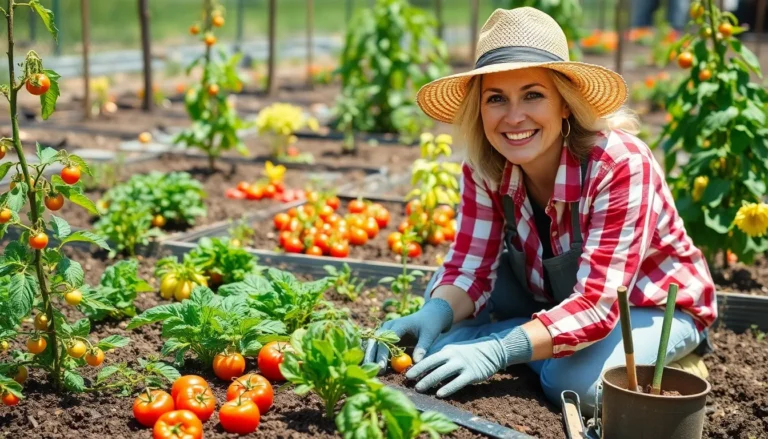


Gardening can feel like a cosmic dance, and what better way to get in sync with nature than by using a moon phase planting calendar? Imagine planting your tomatoes under a waxing moon while the stars cheer you on. It’s like having a secret weapon in your gardening arsenal that even Mother Nature would approve of.
moon phase planting calendar
Moon phase planting involves timing gardening activities according to the lunar cycle. Many gardeners believe this method enhances plant growth and yields.
What Is a Moon Phase Planting Calendar?
A moon phase planting calendar provides guidance on which plant types to sow and when to do so based on lunar phases. The calendar categorizes planting into four main phases: new moon, waxing moon, full moon, and waning moon. Each phase influences plant energy and growth. For instance, the waxing moon promotes foliage growth, making it ideal for crops like lettuce and spinach. In contrast, the waning moon favors root development, perfect for planting carrots and potatoes. Understanding these nuances helps gardeners optimize their planting schedules.
History and Importance of Moon Phase Planting
Moon phase planting dates back thousands of years, with ancient civilizations utilizing lunar cycles for agriculture. Farmers in cultures such as the Mayans and Egyptians relied on lunar observations to determine planting times. Their practices demonstrated that aligning gardening activities with moon phases enhances crop success. Scientific studies support these time-tested methods, showing that the moon’s gravitational pull affects moisture levels in the soil. Gardeners today continue to embrace this tradition, finding that it improves yield and plant health. Using a moon phase planting calendar reflects a harmonious connection to nature and a reverence for historical agricultural wisdom.
How to Use a Moon Phase Planting Calendar

Utilizing a moon phase planting calendar simplifies the gardening process. Gardeners can enhance their practices by aligning planting activities with lunar cycles.
Planning Your Garden With the Calendar
To utilize the calendar effectively, identify the appropriate moon phases for your desired crops. The calendar divides the lunar cycle into four primary phases. During the new moon, focus on planting leafy greens and fast-growing annuals. In the waxing moon, prioritize transplanting and sowing seeds that develop above ground. The full moon encourages planting flowering plants and fruit-bearing crops, while the waning moon is ideal for root crops and perennials. Successful gardening often relies on understanding how each phase influences plant growth and health.
Timing Your Planting Based on Moon Phases
Timing plays a crucial role in maximizing plant vitality. Schedule planting activities according to the moon phases, ensuring optimal conditions for growth. For instance, sowing seeds during the waxing moon strengthens plant energy and boosts foliage development. When the moon wanes, focus efforts on root vegetables, as energy shifts below ground. Recognizing these patterns allows gardeners to plan ahead, ensuring proper timing for optimal growth and yields. Tracking these phases with the calendar aids in achieving a more successful gardening experience.
Benefits of Moon Phase Planting
Moon phase planting offers significant advantages for gardeners seeking to improve their results. Aligning planting activities with lunar cycles optimizes growth potential and enhances yield quality.
Enhanced Growth and Yield
Planting in sync with the moon can lead to improved plant vitality and increased harvests. The gravitational pull of the moon affects soil moisture levels, allowing seeds to absorb more water during specific lunar phases. For instance, crops such as tomatoes and peppers benefit from being planted during a waxing moon. This phase encourages vigorous foliage growth, resulting in healthier, more productive plants. Research suggests that gardeners who follow moon phase planting methods often experience stronger plants that yield higher quantities of fruits and vegetables.
Organic Gardening Practices
Using moon phase planting aligns well with organic gardening principles. This approach minimizes chemical inputs by utilizing natural cycles to guide planting decisions. Focusing on phases like the new moon allows for the planting of leafy greens without chemical fertilizers. Following these cycles helps gardeners respect the environment and promotes biodiversity. Many organic gardeners report that adhering to moon phases supports better pest control, as certain insects are less active during specific lunar cycles. This method cultivates a more sustainable gardening practice, enhancing the health of both plants and soil.
Common Misconceptions About Moon Phase Planting
Many people think moon phase planting is just a fad. This method actually has grounded roots in agricultural history. Some believe only specific crops thrive when planted according to lunar phases, but various plant types benefit depending on the phase. For example, leafy greens flourish during a waxing moon, while root vegetables excel during a waning moon.
Another misconception involves the need for precise timing. While it’s best to align planting activities with the lunar cycle, flexibility often yields successful results. Observing weather conditions and soil moisture can enhance outcomes just as much as lunar phases.
Many gardeners also assume that moon phase planting relies solely on ancient beliefs. Scientific studies have shown that lunar cycles can affect soil moisture levels and plant growth patterns. By adhering to these cycles, gardeners optimize their planting strategies.
Some think moon phase calendars offer complicated schedules. In reality, these calendars simplify gardening by providing a clear framework for planting times. They categorize phases into new, waxing, full, and waning, which corresponds intuitively with distinct gardening activities.
A common myth suggests moon phase planting guarantees success. While this method improves growth potential, other factors like soil quality and care practices are equally important. Healthy plants result from a combination of lunar alignment and attentive gardening practices.
Overall, understanding these misconceptions helps gardeners better appreciate moon phase planting’s benefits. Armed with accurate knowledge, they can align their practices with lunar cycles for optimal gardening success.
Conclusion
Embracing a moon phase planting calendar can transform gardening into a more intuitive and rewarding experience. By aligning planting activities with lunar cycles, gardeners tap into natural rhythms that enhance growth and yield. This method not only respects ancient agricultural wisdom but also incorporates scientific insights into plant health.
As gardeners explore the benefits of moon phase planting, they’ll find that flexibility and observation remain key. While lunar cycles provide valuable guidance, attention to local conditions ensures the best outcomes. Ultimately, integrating moon phase planting into gardening practices fosters a deeper connection to nature and promotes sustainable, thriving gardens.